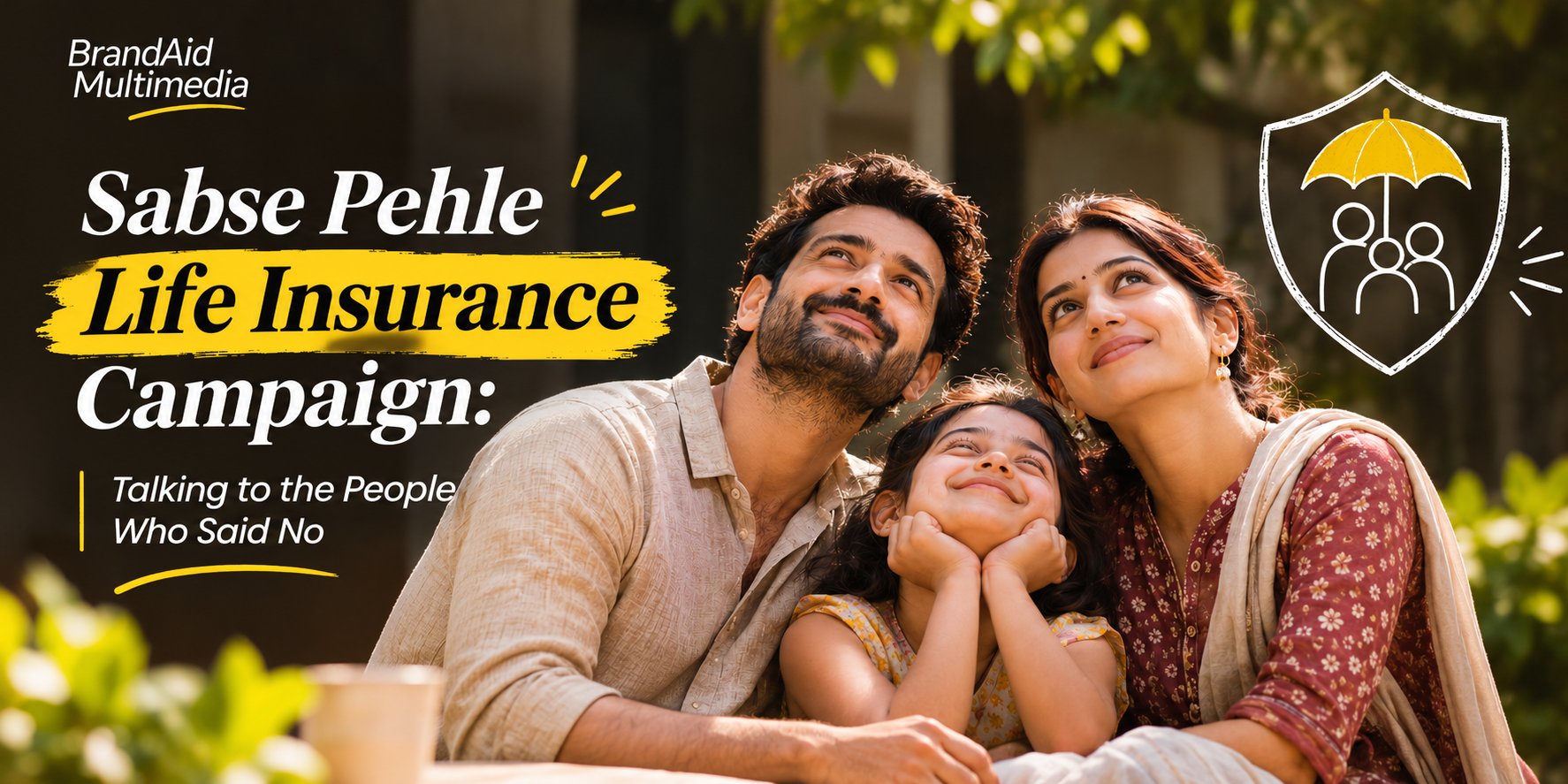
Sabse Pehle Life Insurance campaign has moved into its hardest phase yet. The earlier rounds were about awareness. This one goes after the people who already know about life insurance and still say no.
That is a braver brief.
Awareness is easy to measure.
Changing a sceptic’s mind is not.
And most brands never write that brief at all.
What Happened
The Insurance Awareness Committee (IAC-Life) has launched the next phase of its Sabse Pehle Life Insurance (SPLI) campaign, as reported by MediaNews4U. It targets what the campaign calls “rejectors”: people who are aware of life insurance but reluctant to consider it. IAC-Life’s audience assessment puts them at 28% of Indian consumers. Their doubts include whether insurers will honour claims, the perceived lack of returns from term insurance, and whether long-term savings plans can generate income.
The films are directed by Shoojit Sircar. Vikrant Massey and Shweta Tripathi front the Hindi campaign, while Kalidas Jayaram and Aishwarya Rajesh represent it in South Indian markets. It runs in Hindi and 10 regional languages for 18 active weeks across two bursts: end-October to mid-December 2026, then January to March 2027.
MediaBrief reports that the rural share of media investment rises to 30%, up from 23% the previous year, with digital wall paintings and other outdoor activity across 425 towns.
Kamlesh Rao, Chairperson, IAC-Life, said: “Building awareness of life insurance is only the first step.”
Why the Sabse Pehle Life Insurance Campaign Works
1. It Names the Objection Instead of Shouting Over It
This phase is built around specific doubts: claims, returns and income. Our view: this is the smartest thing about it. Most category advertising repeats the benefit, only louder. We think speaking directly to the reason people say no is what moves an audience that has stopped listening.
2. The Brief Starts From Evidence
Both reports cite a Kantar post-campaign evaluation from July 2026 for the earlier phase: top-of-mind awareness rose from 57% to 66%, and purchase intent from 49% to 56%. We like the logic here. Awareness had grown, so the next job was the objection, not more awareness.
3. Regional Faces Do the Trust Work
Hindi plus 10 regional languages, and separate leads for South Indian markets. In a category built on trust, we would argue that hearing your own language from a familiar face matters more than any clever line.
4. The Money Follows the Audience
Rural media share going from 23% to 30%, plus outreach across 425 towns, is not a media footnote. We would go further: it is the strategy. Too many campaigns say “Bharat” in the deck and spend in the metros.
Where We Would Be Careful
The Kantar numbers belong to the earlier phase, not this one. Whether this phase actually converts rejectors is not yet known.
Purchase intent is not purchase. We have not seen policy or sales data, and neither report gives any.
The 28% rejector figure comes from IAC-Life’s own audience assessment. The reports do not share the sample or method.
And there is a limit to what any ad can fix. If someone doubts that claims get paid, a well-made film can open the door. Only the claims experience keeps it open.
What Marketers Can Learn From the Sabse Pehle Life Insurance Campaign
- Split your audience into “unaware” and “aware but unconvinced”. They need different briefs.
- Write down the top three objections in your customers’ own words, then build one piece of content for each.
- Measure every phase, so the next brief starts from evidence rather than opinion.
- If your growth audience is outside the metros, move the budget there, not just the language.
We saw a similar patience-first approach to financial products in the Tata Mutual Fund SIP campaign.
Final Thoughts on the Sabse Pehle Life Insurance Campaign
Most marketing talks to people who are already halfway in. The Sabse Pehle Life Insurance campaign is aimed at the ones who walked away.
That is where the real growth sits.
Want campaigns that answer your customers’ real objections? Talk to our team or explore our digital marketing services.