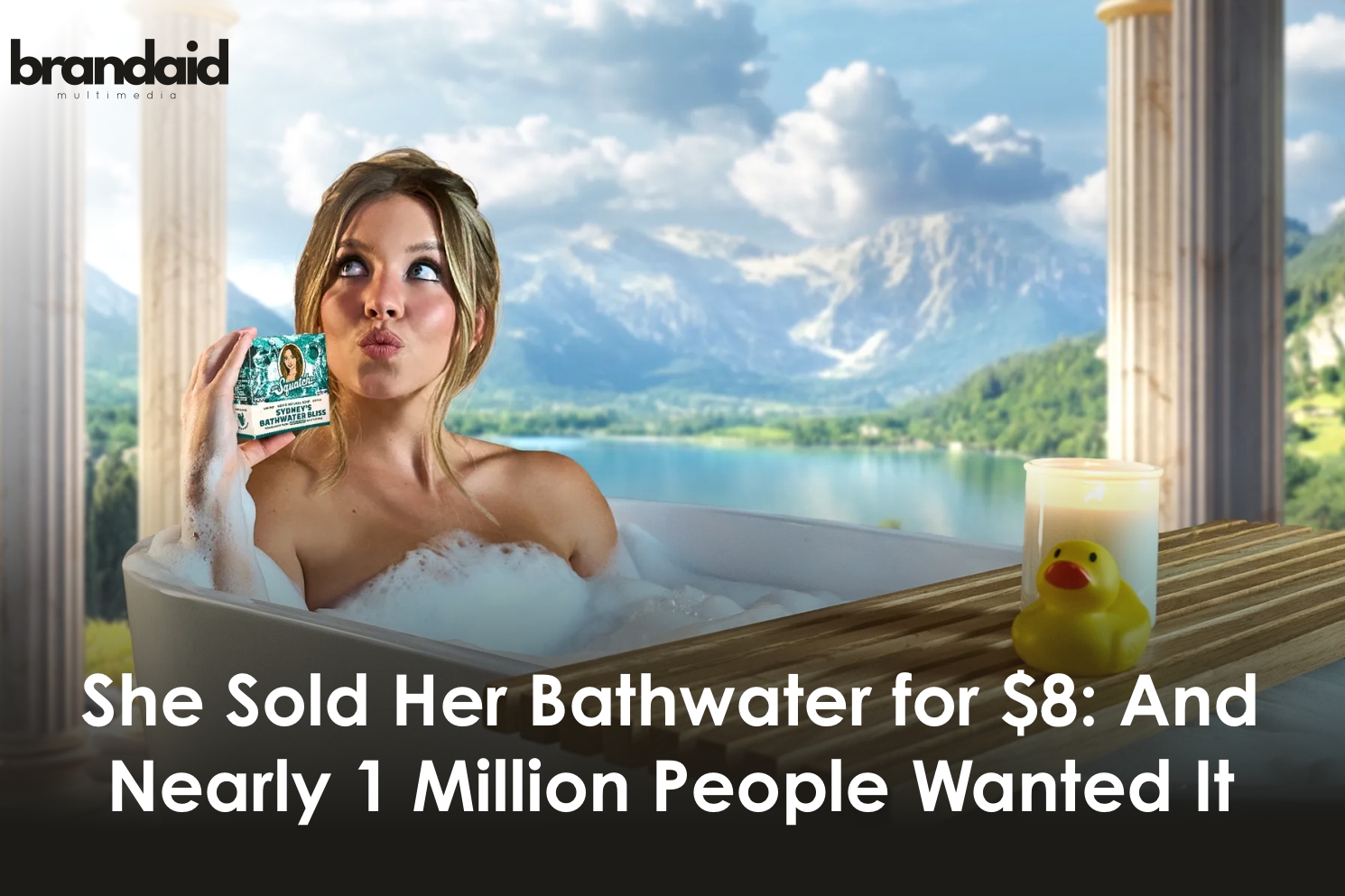
Nearly one million people entered a contest to win soap made with a celebrity’s USED bathwater. No, this isn’t some weird story made up on the internet. It’s Dr. Squatch’s latest marketing campaign, along with Sydney Sweeney.
In a world drowning in generic influencer partnerships and normal brand collaborations, one campaign by Dr. Squatch (a men’s grooming brand focused on natural ingredients) stopped the internet dead in its tracks.
When Sydney Sweeney announced she was literally selling soap made with her actual bathwater, the collective jaw-drop was audible across social media platforms.
And to be clear, they were not selling luxury soap. Not celebrity-endorsed soap. Soap made with Sydney Sweeeney’s actual bathwater.
This isn’t just another celebrity marketing stunt. It’s a masterclass in understanding your audience, embracing the absurd, and turning fan obsession into profit.
The Fan Mail That Started It All
The campaign didn’t emerge from a boardroom brainstorm. It started with fan mail.
“When your fans start asking for your bathwater, you can either ignore it, or turn it into a bar of Dr. Squatch soap,” the company shared.
Most companies would’ve pretended those emails never existed.
But Dr. Squatch saw dollar signs.
They chose chaos, and it paid off spectacularly.
Why This Marketing Campaign Cut Through the Noise
1. The Shock Factor
In an era where consumers are bombarded with over 5,000 ads daily, breaking through requires more than just creative execution.
It demands something that makes people stop scrolling and start talking.
Sydney’s Bathwater Bliss achieved this by being so outrageous that it became impossible to ignore.
The campaign succeeded because it wasn’t trying to be clever or subtle. It was weaponizing the very thing that makes most marketers uncomfortable:
The weird, obsessive nature of fan culture.
2. Unconventional Marketing
The brand (Dr Squatch) has a history of unconventional marketing. Their previous campaign with Nick Cannon, where he insured his testicles for $10 million.
This track record of embracing the absurd has built them a reputation for campaigns that people actually remember.
3. Limited Scarcity That Drives Desire
Only 5,000 bars of Sydney’s Bathwater Bliss were made available.
Also, to meet the high demand, Dr. Squatch held a giveaway for 100 bars of the soap, with over 973,000 people (The “nearly 1 million people” we were talking about) entering the contest as of June 6, 2025.
The artificial scarcity wasn’t just a marketing tactic. Iit was essential to the campaign’s success.
If this soap were available indefinitely, it would lose its collector’s item appeal.
The Psychology Behind this Marketing Madness
Why did nearly a million people want celebrity bathwater?
- Parasocial Intimacy: Fans develop one-sided emotional connections with celebrities. Owning something that was literally part of their daily routine satisfies a desire for intimacy and connection.
- Scarcity Addiction: Only 5,000 bars existed. Our brains are wired to want what we can’t have.
- Social Currency: Owning Sydney’s bathwater soap becomes the ultimate conversation starter and a form of social status within fan communities.
The Execution Excellence
Minimal Paid Media, Maximum Impact
Dr. Squatch put little paid media behind the campaign, relying instead on organic sharing and earned media.
This approach worked because the concept itself was so shareable that it didn’t need advertising.
It WAS the advertising.
Price Point Marketing Strategy
At $8 per bar, the soap was accessible enough for impulse purchases while being premium enough to feel special.
This pricing sweet spot made it easy for fans to participate without feeling exploited.
The Bigger Picture
This wasn’t just a soap campaign – it was cultural commentary on fan obsession, celebrity worship, and the lengths people will go for connection.
The campaign succeeded because it understood a fundamental truth: In a world of infinite choice, being memorable matters more than being perfect.
Why This Matters for Your Marketing
Traditional marketing wisdom would’ve killed this campaign in the concept phase. “Too weird, niche, or risky”
But in 2025’s attention economy, those might be exactly the reasons it worked.
The brands winning today aren’t playing it safe – they’re playing it real. They understand their audience so deeply that they can turn obsession into opportunity.
Conclusion
Sydney Sweeney’s bathwater soap campaign proves that sometimes the best marketing strategy is simply listening to what your customers are actually asking for. Even when they’re asking for bathwater.
The results speak for themselves:
- 973,000 contest entries in 5 days
- Minimal paid media spend
- Maximum cultural impact
- A case study that’ll be taught in marketing classes for years
In an industry obsessed with targeting and segmentation, this campaign reminded us that sometimes the best approach is to go all-in on the customers who already love you, no matter how strange their love might seem.
The takeaway? It requires a different level of madness to cut through the noise in this marketing-heavy world. Catching people’s attention is EVERYTHING.
Recently, Razorpay bought expensive ad slots during IPL matches. But instead of making ads about Razorpay, they made ads about 35 different startups. Read the full story here…