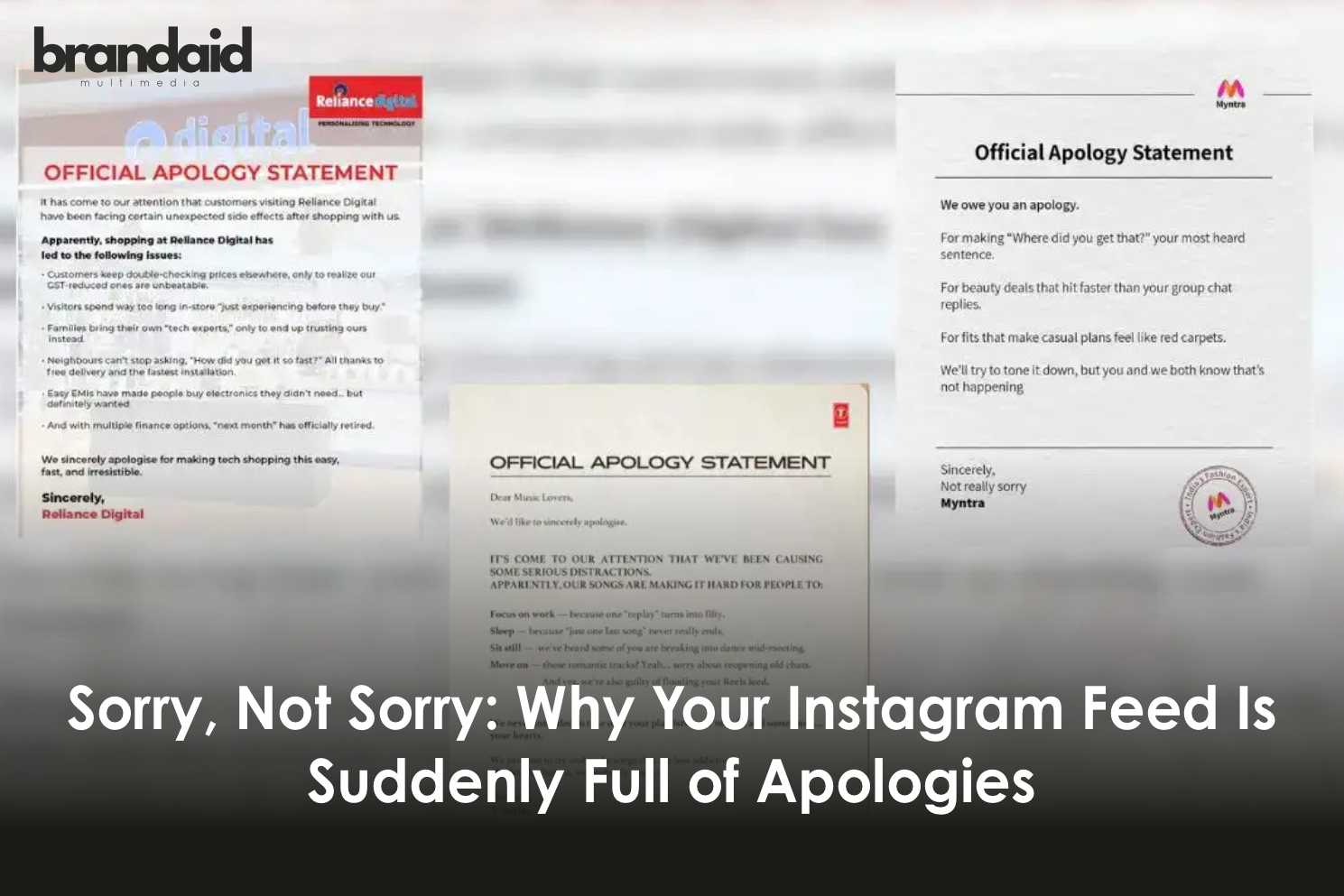
Your Instagram feed is flooded with apologies. But nobody did anything wrong.
Skoda is sorry. Haldiram’s is sorry. Your favorite restaurant is sorry. Even cement companies are sorry. They’re all posting “Official Apology Statements” on Instagram, complete with serious letterheads and a corporate tone.
Here’s the twist though: they aren’t apologizing for a mistake. They’re apologizing for being too good.
Where Did This Trend Come From?
This isn’t an overnight phenomenon. It’s a global inside joke that finally hit the mainstream.
The “Official Apology” trend reportedly started in the Philippines in 2024. From there, it slowly gained traction before exploding globally in November 2025. India, in particular, has become the creative hub for the trend, with brands across every industry jumping on board.
It started as a meme and evolved into a full-blown marketing strategy.
The Anatomy of a Fake Apology
This isn’t your typical celebrity non-apology. This is a marketing masterclass disguised as a meme.
The formula is simple, but deadly effective:
1. The Scroll-Stop: It starts with a visual that looks like a serious corporate announcement. A formal letterhead, a bold title: “OFFICIAL APOLOGY STATEMENT.” You stop scrolling, thinking, “What’s the drama?”
2. The Formal Tone: The first few lines sound like they were written by a legal team. “It has come to our attention…” “We sincerely apologize for…”
3. The Humorous Twist: Then, the punchline. The brand isn’t sorry for a scandal. They’re sorry for something positive.
No recall. No bad press. No corporate blah blah. Just a clever way to brag.
Who’s Apologizing? (And For What?)
Everyone is in on the joke, from car companies to snack makers and chefs.
· Volkswagen apologized for making cars so good you don’t want to leave them.
https://www.instagram.com/p/DQl3rtOiEZI/?utm_source=ig_web_copy_link&igsh=MzRlODBiNWFlZA==
· Adani Ambuja Cement apologized for making walls so strong you can’t drill a nail into them.
https://www.instagram.com/p/DQtwbxKEqjx/?utm_source=ig_web_copy_link&igsh=MzRlODBiNWFlZA==
· Myntra said sorry for having deals so good they disrupt your savings goals.
https://www.instagram.com/p/DQuC0-pCdDV/?utm_source=ig_web_copy_link&igsh=MzRlODBiNWFlZA==
· Haldiram’s and Keventers issued apologies for causing uncontrollable cravings.
· Dharma Productions apologized for making you “cry, swoon, and text your ex.”
· T-Series jokingly said sorry for causing “serious distraction” with its music.
Why This Deceptively Simple Trend Works
It’s bold. It’s fast. It’s fun. It’s everything a good marketing campaign should be.
This trend flips the script on boring corporate communication. Instead of being defensive, brands are going on the offensive with humor. It makes billion-dollar companies feel human, relatable, and self-aware.
It works because:
1. It Hijacks Your Curiosity: You see a formal apology and expect a crisis. Instead, you get a joke, and that surprise makes the message memorable.
2. It’s a Soft Sell: It’s an ad that doesn’t feel like an ad. It’s entertainment. You don’t just see it; you get it.
3. It Builds Connection: By joining a meme, brands show they understand internet culture. They’re not just a logo; they’re part of the conversation.
Most advice is garbage. This isn’t. This is how you connect in 2025.
Conclusion
Jumping on a viral trend can be risky. Do it wrong, and you look out of touch.
But the “Official Apology” trend is different because it’s built on self-confidence.
If you want to try it, follow these rules:
1. Be Genuinely Good: The joke only works if you’re apologizing for something your customers actually love about you.
2. Nail the Format: Don’t half-do it. Use a formal letterhead and corporate jargon to set up the punchline.
3. Be Quick: This is a fleeting trend. The window to join is closing fast.
This trend is a masterclass in turning a brand monologue into a public conversation. It’s about making people feel something, then showing them you’re in on the joke with them.
Sometimes, the best way to say “we’re great” is to say “we’re sorry.”