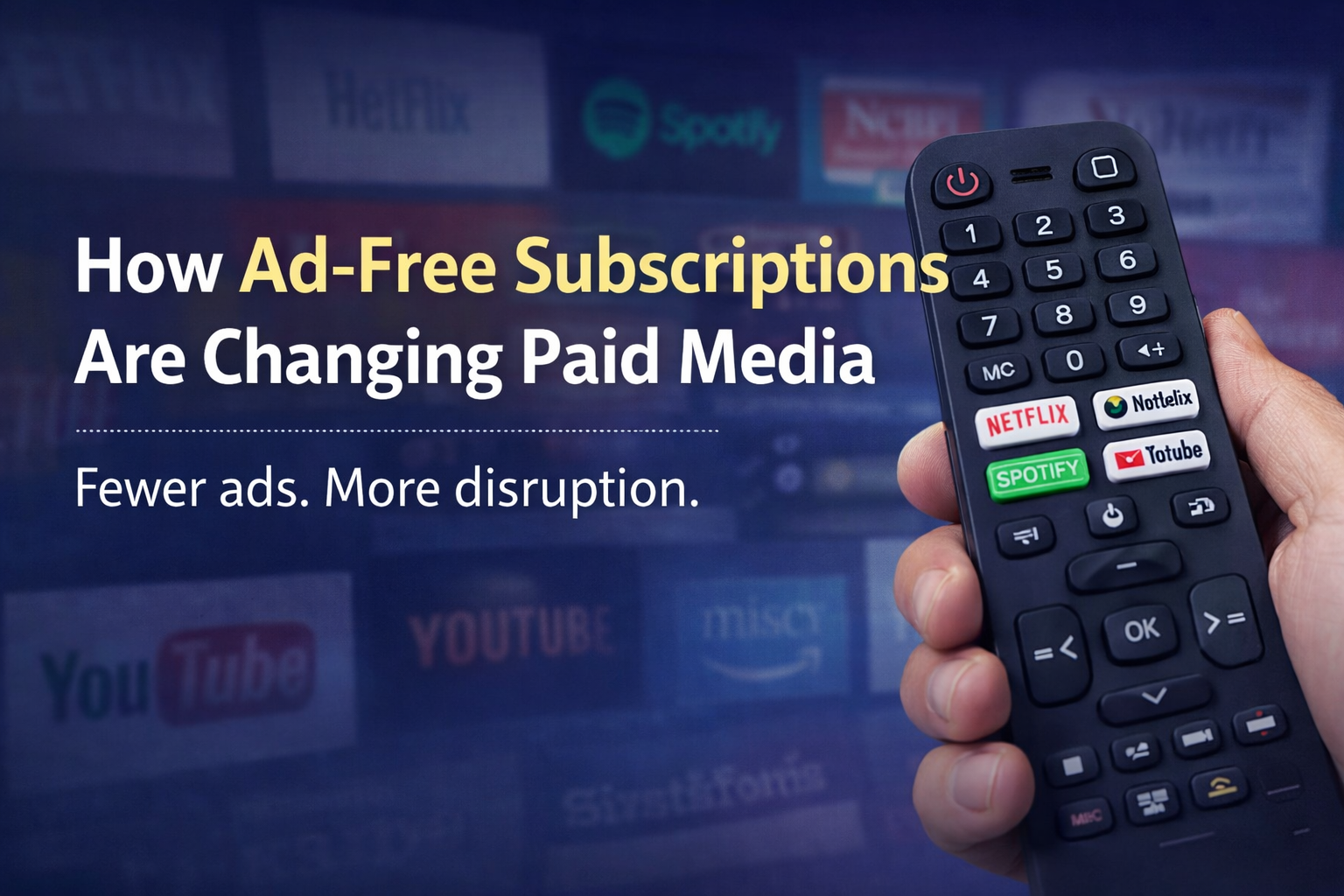
The ad-free subscriptions’ impact on paid media is becoming impossible for marketers to ignore. Platforms that once relied entirely on advertising are now offering users the ability to remove ads through paid subscriptions. From streaming platforms to social media networks, the shift toward ad-free experiences is quietly reshaping how brands reach audiences.
As more users opt to pay for uninterrupted content, marketers must rethink how paid media strategies will evolve in a world where fewer ads are being seen.
The Rise of Ad-Free Subscriptions Across Platforms
The ad-free subscriptions’ impact on paid media began with streaming services but is now spreading across the digital ecosystem.
Platforms offering ad-free tiers include:
- Video streaming services like Netflix and YouTube Premium
- Music platforms such as Spotify
- Social media platforms are experimenting with premium experiences
- News publishers introducing subscriber-only content
These models allow users to pay for convenience, privacy, and uninterrupted entertainment.
For consumers, the appeal is obvious: fewer interruptions and a cleaner digital experience.
For advertisers, the implications are far more complex.
Why Ad-Free Subscriptions Reduce Paid Media Reach
One of the most direct effects of the ad-free subscriptions’ impact on paid media is the shrinking availability of advertising inventory.
When users choose ad-free tiers:
- They are removed from ad-serving audiences
- Brands lose impressions and exposure opportunities
- Targeting pools becomes smaller
As a result, advertisers must compete for a smaller number of available ad placements.
This often drives higher costs and increased competition within paid media channels.
How Paid Media Costs May Increase
Another important aspect of the ad-free subscription’s impact on paid media is pricing pressure.
When platforms reduce ad inventory due to ad-free users, demand remains constant but supply shrinks.
This creates:
- Higher CPMs (cost per thousand impressions)
- Increased competition for premium placements
- Greater pressure on performance marketing budgets
Marketers may need to spend more simply to maintain the same level of visibility.
The Shift Toward Owned and Earned Media
As the ad-free subscription’s impact on paid media continues to grow, brands are increasingly investing in alternative channels.
These include:
- Creator partnerships
- Influencer collaborations
- Community building
- Owned content platforms
Instead of relying solely on paid ads, brands are learning to build audiences directly.
This shift reduces dependency on platform-controlled advertising ecosystems.
Why Brand Storytelling Becomes More Important
When paid reach declines, brand storytelling becomes a powerful differentiator.
The ad-free subscriptions’ impact on paid media means that brands must focus more on creating content that audiences actively seek rather than content they are forced to watch.
This includes:
- Entertainment-driven marketing
- Brand-led storytelling
- Social-first campaigns
- Cultural collaborations
When audiences choose what they consume, relevance becomes critical.
What Marketers Should Do Next
The ad-free subscriptions’ impact on paid media is not a temporary trend. It signals a long-term transformation in how advertising ecosystems operate.
To adapt, marketers should:
- Diversify marketing channels beyond paid ads
- Invest in creator and influencer partnerships
- Build stronger owned media platforms
- Focus on storytelling that attracts voluntary attention
The future of marketing may rely less on interruption and more on participation.
Final Thoughts
The ad-free subscriptions’ impact on paid media represents a significant shift in digital marketing. As users increasingly pay for uninterrupted experiences, traditional advertising models will face new limitations.
Brands that adapt early will focus less on forcing attention and more on earning it.
In the evolving media landscape, attention will no longer be rented — it will have to be earned.