For years, marketing followed one rule — sell harder.
Bigger claims, louder messaging, constant persuasion.
Today, that approach is breaking.
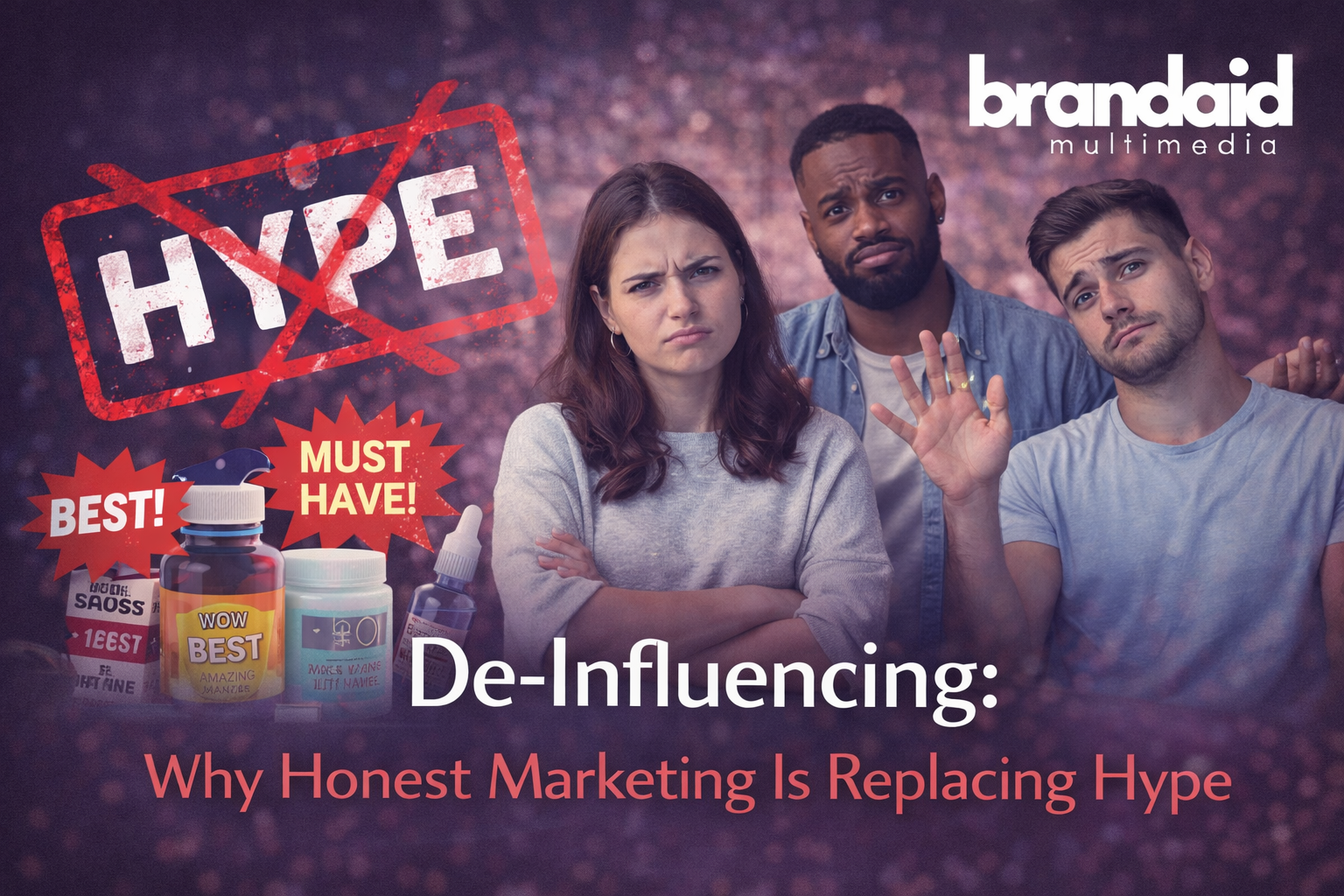
Consumers are no longer impressed by perfection. They are drawn to honesty. And this shift has given rise to a powerful trend: de-influencing.
Instead of pushing people toward a purchase, brands are earning trust by telling them when not to buy.
What Is De-Influencing?
De-influencing is a marketing approach that prioritises honesty over hype.
It shows up when brands and creators:
- Admit a product isn’t for everyone
- Share real pros and limitations
- Encourage thoughtful decision-making
- Focus on suitability instead of urgency
Rather than persuading blindly, de-influencing empowers people to choose with clarity.
Why De-Influencing Is Gaining Momentum
Audiences are tired of being sold to.
They’ve seen:
- Over-edited reviews
- Paid recommendations disguised as opinions
- “Must-have” products that disappoint
As a result, trust has shifted away from exaggerated claims and toward transparency.
De-influencing resonates because it feels human. It respects intelligence. And it signals confidence instead of desperation.
Honest Marketing Builds Stronger Trust
Trust doesn’t grow when brands exaggerate. It grows when brands tell the truth.
When brands openly say:
- “This won’t work for everyone”
- “Here’s who this is best suited for”
- “This may not be the right choice if…”
They remove pressure from the decision.
Ironically, that honesty often increases conversions — because people feel respected, not manipulated.
De-Influencing Is Not Anti-Selling
De-influencing doesn’t mean discouraging growth.
It means aligning growth with integrity.
Brands that practise honest marketing still sell — but they sell to the right people. This leads to:
- Higher satisfaction
- Fewer refunds
- Stronger loyalty
- Better word-of-mouth
When expectations are set clearly, experiences improve naturally.
Why De-Influencing Strengthens Brand Equity
Short-term hype may create spikes. Long-term honesty creates brands.
De-influencing strengthens brand equity because it:
- Signals confidence in the product
- Builds credibility over time
- Positions the brand as a guide, not a pusher
- Encourages trust-based advocacy
People remember brands that helped them make better decisions — even if they didn’t buy immediately.
How Brands Can Practise De-Influencing Authentically
De-influencing must feel intentional, not performative.
Brands can practise it by:
- Being clear about limitations
- Sharing real use cases
- Avoiding exaggerated language
- Letting customers speak honestly
- Focusing on long-term relationships
The goal isn’t to talk people out of buying — it’s to talk them into clarity.
The Future of Marketing Is Honest
As audiences become more informed, marketing must become more transparent.
De-influencing reflects a broader shift — from persuasion to partnership. Brands that embrace honesty don’t lose relevance. They gain respect.
And in a crowded digital landscape, respect is far more powerful than reach.
Final Thought: Trust Grows When Brands Stop Pretending
De-influencing proves one thing clearly — people don’t want perfect brands. They want real ones.
When brands replace hype with honesty, marketing stops feeling transactional and starts feeling human.
And that’s where lasting growth begins.